AI Tools for Online Income in 2026: Trading, Content, Automation and Smarter Decisions
A practical guide to using AI tools for online income, trading research, copy-trading strategy selection, content creation, automation and risk-aware decisions.
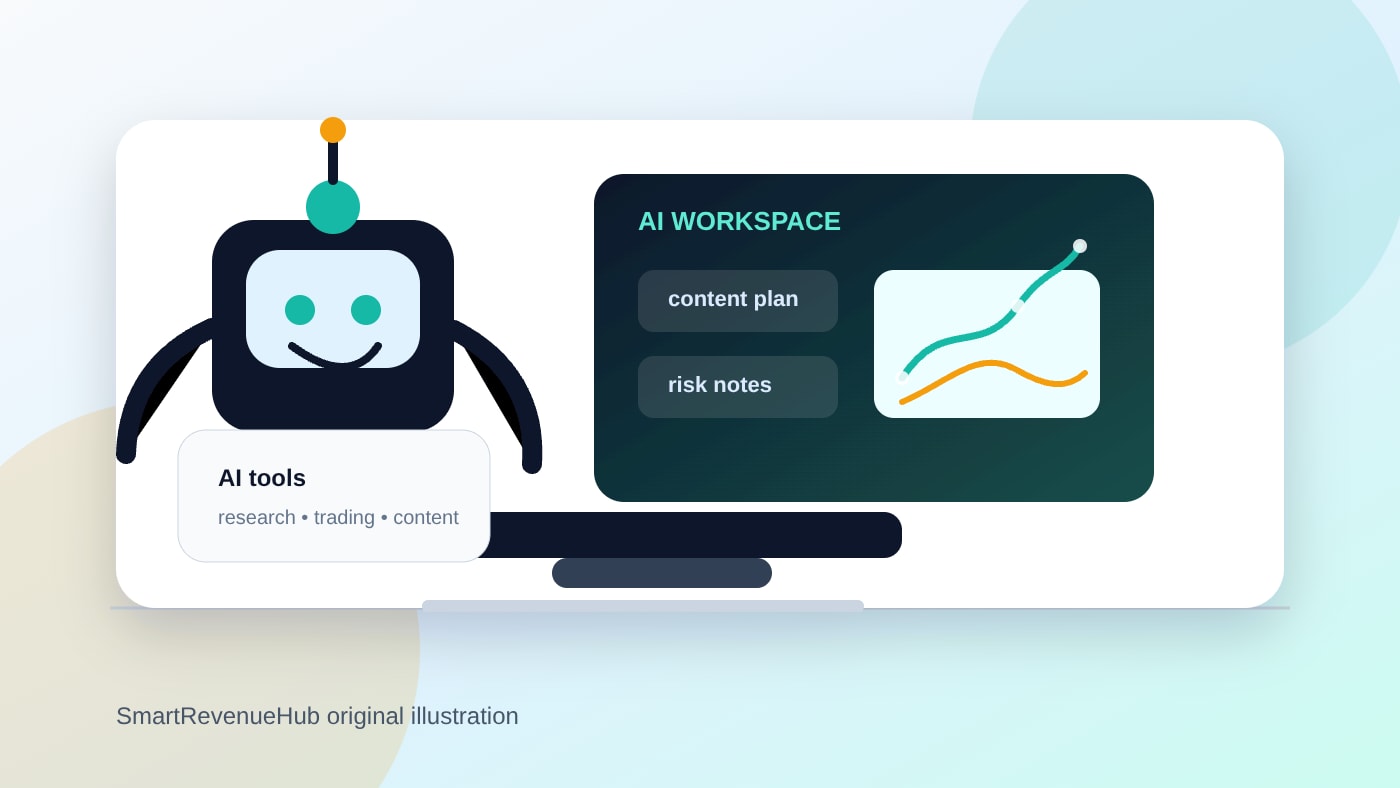
AI tools are no longer just writing assistants. Used properly, they can become a research desk, a trading journal, a content planning system, a spreadsheet assistant, a coding helper, and a second pair of eyes for decisions that affect money. Used poorly, they produce average text, fake confidence, and a long list of ideas that never turn into income.
The difference is workflow. A good AI workflow does not start with "write me an article" or "give me a signal." It starts with a real business or trading problem: choosing a broker, comparing copy-trading managers, preparing SEO content, checking risk, building a watchlist, or turning raw notes into a useful decision. That is where AI starts to feel less like a toy and more like leverage.
Quick verdict
AI tools can help online income projects in three practical ways: they reduce research time, structure decisions, and speed up production. For trading, they can help compare brokers, review strategy statistics, explain market context, and organize risk rules. They should not be treated as a guaranteed signal machine.
If your goal is to profit from trading without building everything yourself, one realistic route is to use AI for analysis and then look at copy-trading managers. Our CopyFX trader ranking is built for that idea: you can review selected managers and strategies, and some of those traders may already use automation, data analysis, scripts, indicators, or AI-style tools in their own workflow. Instead of trying to build a full trading system from zero, you can study those strategies and copy trades where the risk profile makes sense. This is especially practical with RoboForex, where copy trading is a core part of the broker ecosystem.
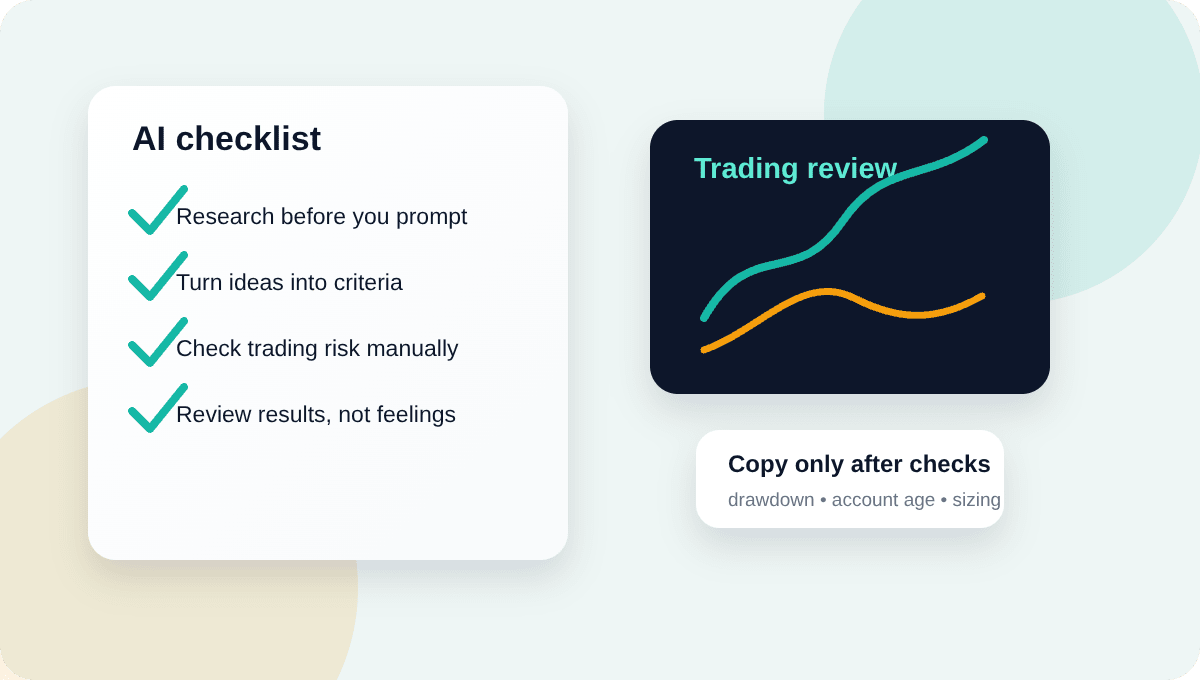
Important: that does not make the process passive or risk-free. You still need to check drawdown, account age, position sizing, open trades, broker conditions, and whether the strategy fits your own capital. AI can help you ask better questions, but it cannot remove market risk.
The main AI tool categories for online income
Most people talk about AI tools as if they are one product category. In reality, different tools solve different income problems. A content creator needs ideation, editing, SEO structure, thumbnails, scripts, and analytics. A trader needs market summaries, broker comparisons, strategy notes, risk tables, and journal review. A website owner needs keyword clustering, internal linking, page updates, and conversion improvements. The useful question is not "which AI tool is best?" but "which part of my workflow is slow, messy, or risky?"
| AI tool type | Where it helps | What to avoid |
|---|---|---|
| Writing and editing | Drafting articles, rewriting weak sections, improving clarity | Publishing generic AI text without personal insight |
| Research assistants | Summarizing brokers, products, tools, markets and competitors | Trusting summaries without checking source pages |
| Data and spreadsheet tools | Cleaning tables, comparing fees, tracking performance | Treating messy data as reliable just because it looks organized |
| Coding assistants | Scripts, calculators, dashboards, automation helpers | Running generated code without review or testing |
| Image and design tools | Blog visuals, diagrams, thumbnails, explanatory graphics | Using fake screenshots or misleading platform images |
| Trading assistants | Checklists, journals, scenario planning, copy-trading filters | Letting AI decide position size or trade execution blindly |
The most profitable use is usually not one spectacular tool. It is a chain of boring improvements: faster research, cleaner decisions, better pages, better follow-up, and fewer repeated mistakes.
AI tools for trading: where they are actually useful
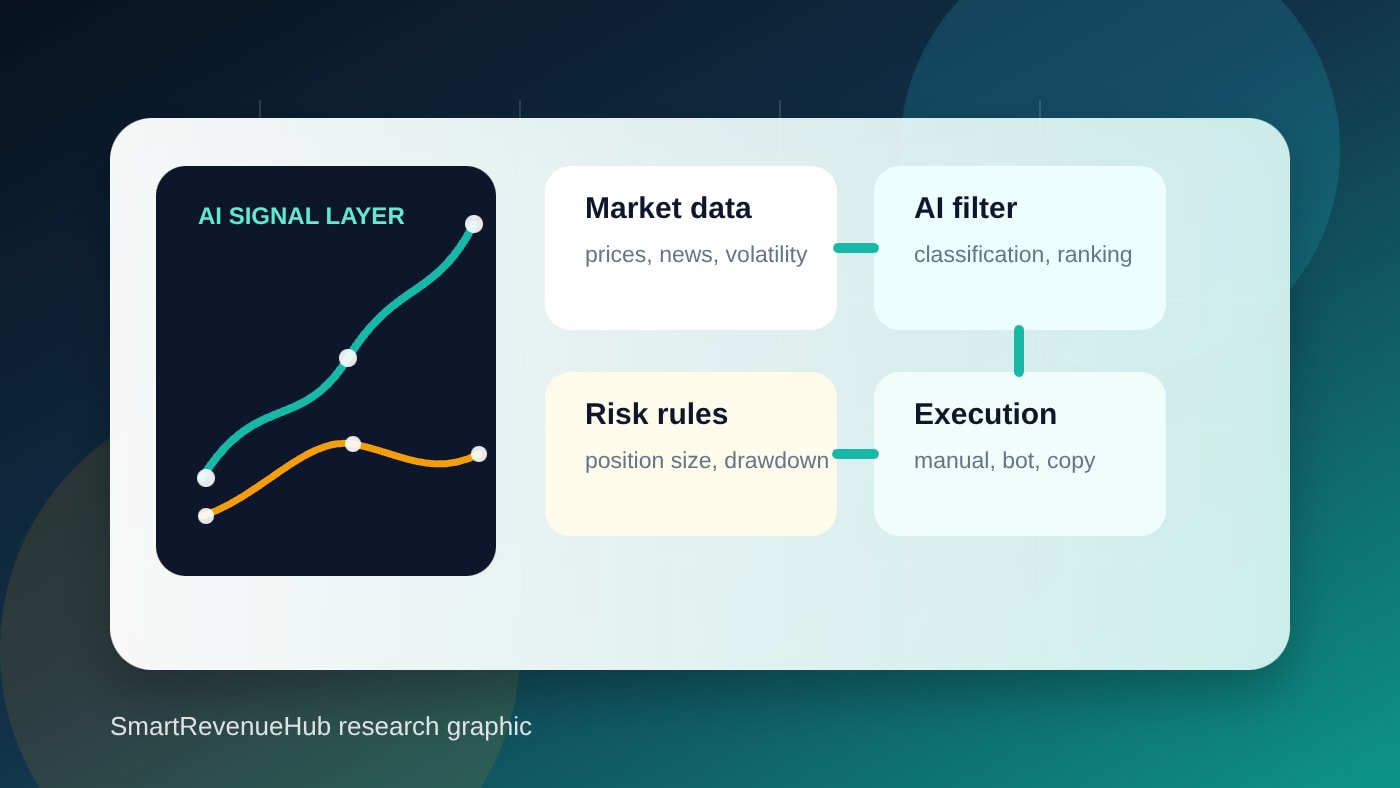
Trading is one of the most tempting areas for AI, because everyone wants better signals. But the useful version is less dramatic. AI is strongest as a research and filtering layer. It can help summarize central-bank news, compare broker conditions, explain a chart pattern, build a risk checklist, or review why a strategy performed badly during a specific market phase. In other words, AI is often better as an analyst beside the trader than as a trader replacing the human.
For example, a trader can paste a journal entry and ask AI to identify repeated mistakes: entering before news, moving stops, overtrading after a loss, or increasing lot size after a winning streak. That is not a magic prediction engine, but it can be very valuable because many trading losses come from repeated behavior rather than lack of information.
AI can also help compare copy-trading strategies. You can ask it to create a checklist for account age, drawdown, profit curve, open floating loss, lot size stability, trade frequency, and broker execution. Then you can use that checklist on real strategy pages. This is why the CopyFX watchlist matters: it gives you a practical place to start comparing traders instead of scrolling through random strategies with no structure.
Why copy trading fits the AI workflow
Many beginners make the same mistake: they try to learn markets, build a strategy, code a bot, choose a broker, manage risk, and control emotions all at the same time. That is too much at once. Copy trading separates part of the problem. You still need to understand risk, but you are not forced to invent the entire strategy from zero.
RoboForex is useful here because its copy-trading ecosystem lets you browse strategies and copy trades while staying in control of your account settings. The full RoboForex strategy ranking is broader than our shortlist, so if you want more candidates, you can open the RoboForex Copy Trading / CopyFX strategy ranking and compare managers directly. This is not a shortcut around due diligence, but it is a more realistic starting point than trying to invent a profitable strategy from a blank screen.
AI becomes useful before you copy, not after. Use it to build the due-diligence framework. Ask it to compare conservative versus aggressive managers, explain why high profit with deep drawdown is dangerous, or turn a strategy description into a risk checklist. Then make the final decision manually. The goal is not to outsource thinking; it is to avoid choosing blindly.
A simple workflow for getting maximum value
The best way to use AI tools is to give them a role inside a repeatable process. If you use AI randomly, you get random output. If you use it as part of a system, the quality improves quickly.
Start with collection. Save notes, links, screenshots, broker pages, strategy pages, keyword ideas, and your own trading observations. AI works better when the input is specific. A prompt like "find me a profitable strategy" is weak. A prompt like "compare these three copy-trading managers by age, drawdown, trade frequency and risk red flags" is much stronger.
Then move to analysis. Ask AI to summarize, rank, group, and challenge the information. Good prompts force the tool to explain uncertainty, list what still needs verification, and separate facts from assumptions. This is useful for trading, SEO, affiliate reviews, and product comparisons.
After that, decide what action is worth taking. Maybe the action is publishing a better article, updating an old page, testing a small copy-trading allocation, building a calculator, or avoiding a broker that looks too risky. Finally, review the result. Did the content get indexed? Did the broker page convert? Did the strategy behave as expected? Did the AI miss something important?
Practical examples
1. Updating an old article
AI can turn a short, dry article into a structured page with sections, internal links, examples, tables, and clearer explanations. But the human still needs to provide the direction: what the site sells, what pages need internal links, what affiliate offers matter, and which claims should be avoided.
For SmartRevenueHub, that means AI should not create generic "top tools" content. It should support topic clusters: forex brokers, copy trading, crypto exchanges, payment systems, hosting, and trading infrastructure.
2. Choosing a broker
AI can help you compare broker pages, fee tables, platform options and regulation notes, but broker selection should always be checked manually. If you are trading forex or copying strategies, start with the forex broker ranking, then read the broker review before opening an account.
3. Filtering trading strategies
A trader ranking can look exciting because recent profit is easy to see. Risk is harder to see. AI can help create a checklist that forces you to look at drawdown, account age, position sizing, open trades, recovery periods and whether the manager changes behavior after losses.
4. Building tools
For a content site, AI can help create calculators, comparison tables, checklists and scripts. Those tools keep users on the site longer than a plain article. This is where AI becomes more than writing: it becomes a development assistant for useful pages.
What not to do with AI tools
Do not copy AI text blindly. Search engines and readers do not need another page that says "AI can improve productivity" in five different ways. Add real examples, practical warnings, internal links, and your own judgment.
Do not use AI as a financial advisor. It does not know your account size, emotional tolerance, tax situation, country restrictions, or current broker terms. It may also sound confident when it is wrong. In finance, confidence without verification is dangerous.
Do not automate live trading just because the model helped you write a strategy. A generated Expert Advisor, Pine Script, or Python bot still needs testing, logs, risk limits, and small-size forward testing. If the tool cannot explain when the strategy fails, the strategy is not ready.
Final thoughts
AI tools can absolutely help with online income, but the best results come from combining them with a real business model. For this site, that means using AI to research markets, improve content, compare tools, build useful pages, and make trading decisions more structured.
For traders, the practical path is simple: use AI to understand and filter, not to gamble. Review brokers, compare strategy managers, check risk, and only then decide whether to copy trades or test a small allocation. The CopyFX trader ranking is a good next step because it connects the AI workflow with real traders and strategies you can study instead of trying to build everything yourself.
AI is a multiplier. If the workflow is weak, it multiplies noise. If the workflow is clear, it can save time, improve decisions, and help you move from random ideas toward a system that can actually produce income.