
Your crypto starting point
Compare top-rated crypto exchanges by fees, liquidity and tools, then size your next position before you trade.
Crypto trading means buying, selling and holding digital assets like Bitcoin or Ethereum through an exchange. A practical order to go through this page:



Where to keep your crypto
Two ratings rather than one, because cold and hot storage answer different questions. A hardware wallet is for value you are not touching; a software wallet is for the coins you actually move, and it is rated per network because the same wallet is not equally good on every chain.






Crypto tools
The calculators and comparisons for what comes after the choice of venue — sizing a position, putting two exchanges side by side, checking which network an address is on, or swapping on-chain without an account.
Position size calculator
Work out position size and risk:reward from your entry, stop-loss and take-profit.
Open calculator →GuideCrypto wallets overview
Hardware, software and custodial wallets explained — plus the hardware wallet rating.
Explore wallets →GuidesCrypto guides
Read exchange walkthroughs, fee breakdowns and account setup guides.
Read guides →CompareExchange vs exchange
Pick any two crypto exchanges and compare them side by side, head to head.
Compare exchanges →CompareWallet vs wallet
Put two hardware wallets side by side on security, backup and incident history.
Compare wallets →BetaSolana Splitter
Auto-split any Solana payment between multiple wallets, on-chain. Free Devnet demo.
Try the demo →ToolSwap USDT to SOL
Swap directly from your Solana wallet - no exchange account, no KYC. Powered by Jupiter's live routing.
Open the swap tool →CheckerCrypto address checker
Which network is this address on, does its checksum pass, and does it need a tag or memo? Checked in your browser, nothing sent.
Check an address →CalculatorExchange fee comparison
Maker, taker and USDT withdrawal fees at all eight rated exchanges, dated, with a calculator that prices your month at each one.
Compare fees →Where the money actually goes, and who can take it
Almost everything that goes wrong in crypto comes down to one question: at any given moment, who is holding the key? On an exchange the exchange holds it, which is convenient until the day your account is reviewed and the balance stops moving. In a wallet you hold it, which is safer in every way except the one where you lose the phrase. Our wallet ratings start from that question rather than from a feature list, because it is the one that decides whether the coins are still yours next month.
The second thing worth knowing before you move anything is that the advertised fee is rarely the real one. A network charges what it charges regardless of what an exchange quotes you, and the gap between those two numbers is where most of the cost of moving crypto hides. It is why this site runs a live exchanger rate monitor instead of quoting a single rate: on a thin pair the spread between the best and worst quote at the same minute regularly runs to several percent.
Everything here is scored on published criteria before any question of a commercial relationship, and entries that fail are listed with the reason rather than quietly removed. That is the whole reason to read a ranking instead of a top-ten list.
Verification is not the same as safety, and no-KYC is not the same as private. Both are trade-offs, and both are worth making deliberately.
Latest crypto guides
View all
LetsExchange Closed: Pending Swaps, the Deadlines and What Our Monitor Saw
The instant-swap service LetsExchange ceased operations on 1 October 2026. What the announcement commits to, how to raise a stuck swap before support closes, and why our monitor kept quoting it for five days.
Read article →
What Is KYC in Crypto? Verification Tiers, the Travel Rule and What "No KYC" Means
KYC is the identity check anti-money-laundering law requires before a business handles your money; on an exchange it sits between sign-up and the first withdrawal. What is checked and why, the verification tiers of the eight exchanges we rate side by side, the travel rule that now follows a withdrawal to another exchange or your own wallet, what the "no-KYC" exchangers on our monitor actually do instead, and the database your passport ends up in.
Read article →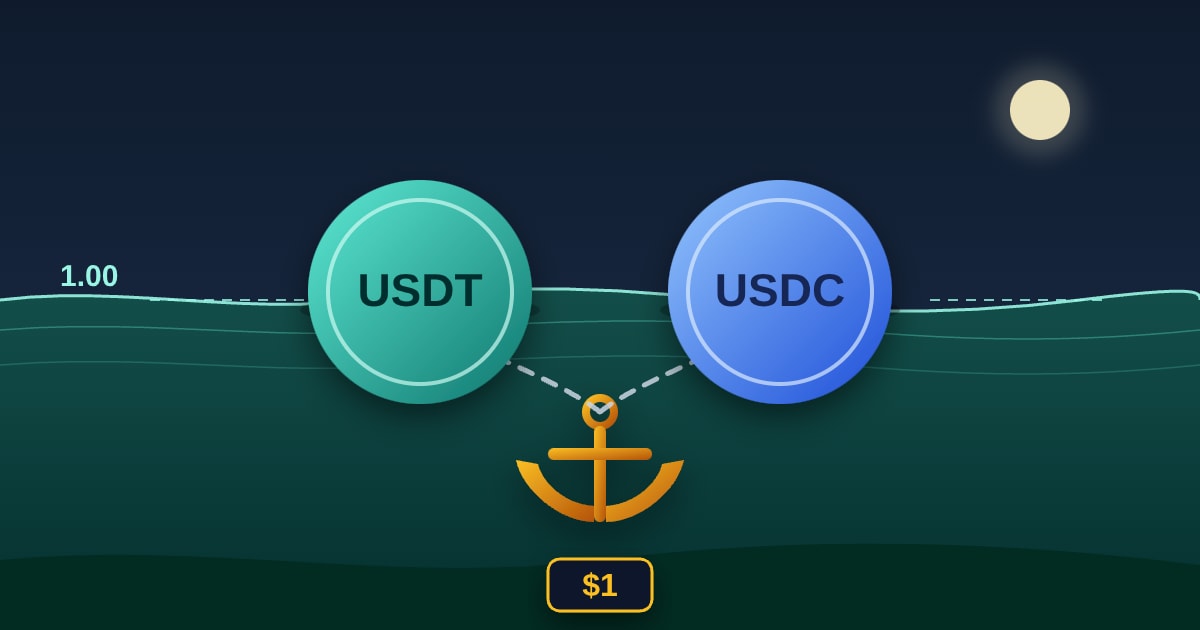
What Is a Stablecoin? USDT vs USDC, and What Holds the Dollar Peg
A stablecoin is a company’s promise to pay one dollar per token, kept at a dollar by traders who can redeem with the issuer and arbitrage the market back. USDT and USDC compared on reserves, redemption, freezing, European and US rules and networks; the two days each broke the peg, as the exchanges printed them; and which coin the exchanger market actually takes.
Read article →