
What Is Leverage in Forex? Margin, Margin Call and Stop Out, One Chain
Leverage sets the margin, the margin sets the margin level, and the margin level is what a margin call and a stop out are measured on. One 1,000-dollar account carried through the whole chain, the levels each of the twenty brokers we rate publishes, and where negative balance protection applies.
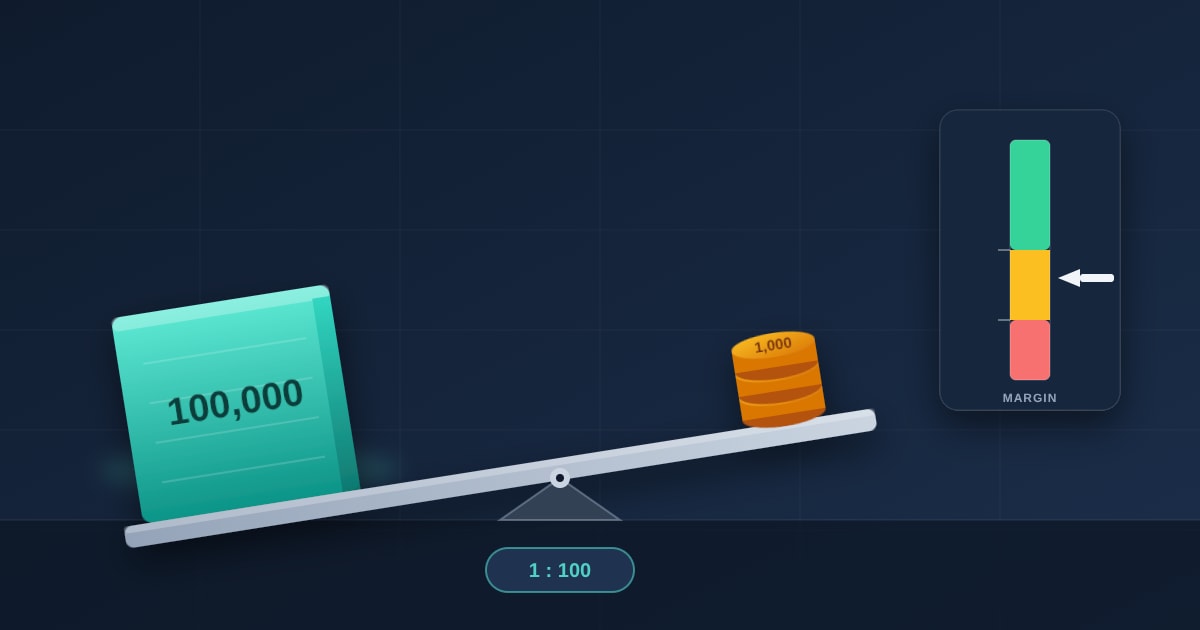
What is leverage in forex? It is the broker letting you hold a position many times larger than the money you put up, and the money you put up is the margin. With 1:100 leverage, 1,000 USD in the account can hold a 100,000 USD position. That one sentence contains the whole subject, because everything that follows is what happens to that 1,000 USD when the position moves.
Leverage sets the margin. The margin sets the margin level. The margin level is the number a margin call and a stop out are measured on, and negative balance protection is the floor underneath the stop out. This page walks that chain once, with one 1,000 USD account carried through every step, and then shows the levels each of the twenty brokers in our forex broker rating publishes, read from their own pages on 18 September 2026.
What leverage in forex actually is, with an example
A standard lot is 100,000 units of the first currency in the pair. One lot of EUR/USD at 1.1000 is 100,000 euros, worth 110,000 US dollars. Nobody trading a retail account has 110,000 dollars per lot, so the broker asks only for a fraction of it as security and lends the rest inside the trade. That fraction is the margin, and leverage is the ratio between the position and the margin.
| Leverage | Margin for one lot of EUR/USD at 1.1000 | Margin as a share of the position |
|---|---|---|
| 1:30 | 3,667 USD | 3.33% |
| 1:100 | 1,100 USD | 1% |
| 1:500 | 220 USD | 0.2% |
The thing to notice is what leverage does not change. A pip on one standard lot of EUR/USD is worth 10 US dollars whether the account runs at 1:30 or at 1:500. Leverage does not multiply your profit or your loss on a given position; the position size does that. What leverage changes is how much of your deposit the broker locks up per lot, and therefore how large a position the deposit can hold. That distinction is the source of almost every misunderstanding about the subject, so it is worth saying twice: leverage decides how big you are allowed to go, and size decides what a pip costs you.
The 1:30 row is not a broker's choice. It is the cap on major currency pairs for retail clients under the European rules ESMA introduced in 2018, made permanent in the UK by the FCA from August 2019 and adopted by ASIC in Australia from March 2021. The 1:500 row and the 1:1000, 1:2000 and 1:3000 figures on some brokers' pages belong to offshore entities that those rules do not reach. The same broker often runs both: a 1:30 account under its European licence and a 1:500 account under a Seychelles or Belize one, and which you get depends on where you live.
Margin, equity, free margin and balance: the four numbers on the terminal
Open MetaTrader with a position running and the bottom bar shows four numbers. They are the whole story of the account, and the order matters.
Balance is the cash in the account after all closed trades. It does not move while a trade is open.
Equity is the balance plus the running result of every open trade. It is what the account is worth right now, and it is the number every rule below is measured against. The search phrase "what is equity in forex" is usually asked by someone who has noticed balance and equity disagreeing and wants to know which one is real. Equity is.
Margin (or used margin) is the sum locked against open positions. It is not a fee and it is not lost; it is returned to free margin when the trade closes.
Free margin is equity minus margin: what is left to open anything else, and the buffer that absorbs a loss before the rules start acting.
Put the 1,000 USD account to work. Buy 0.5 lot of EUR/USD at 1.1000 with 1:100 leverage. The position is 55,000 USD, the margin is 550, the free margin is 450. Now let the price fall fifty pips to 1.0950. On half a lot a pip is 5 dollars, so the floating loss is 250. Equity is 750, margin is still 550, free margin is 200.

The fifth number, the one the terminal shows as a percentage, is the margin level: equity divided by margin, times a hundred. At the open it was 1,000 over 550, or 182%. Fifty pips later it is 750 over 550, or 136%. Every broker's margin call and stop out is a value of this one percentage, which is why the question "what is a good margin level in forex" has a real answer, and it comes at the end of this page.
What is a margin call in forex
Historically a margin call was a telephone call: the broker ringing to say the account no longer covered its positions and asking for more money. Nobody rings now. A margin call today is a state the account enters when the margin level falls to the broker's margin call level, and at most brokers on MetaTrader that level is 100%.
At 100% equity equals margin. The free margin is zero. The terminal turns the bar red, you cannot open a new position, and nothing else happens: the broker does not close anything at a margin call. It is a warning, and you have three ways to answer it. Deposit more, so equity rises above margin again. Close part of the position, so margin falls. Or do nothing and let the price decide, which is what most accounts that reach a margin call do.
In the example, 100% is reached when equity falls to 550, which is a loss of 450 USD, which on half a lot is ninety pips against you. The margin call calculator people search for is that arithmetic: pips to margin call equals equity minus margin times the margin call level, divided by the pip value.
Two things make margin calls confusing in practice. Some brokers set the level below 100%, so the warning arrives only after the free margin has already gone negative, and some, as the table further down shows, use a different number for each account type. And on accounts with high leverage the margin is so small that the margin level starts in the hundreds or thousands of percent, which makes 100% feel far away right up until it is not.
Stop out: the level where the broker closes for you
The stop out level is the margin level at which the broker stops warning and acts. When equity divided by margin falls to it, the platform closes positions, normally starting with the one losing the most, until the margin level is back above the line. On the commonest MetaTrader setting the stop out is 50%.
In the example, 50% means equity of 275: a loss of 725 USD, or 145 pips against the trade. At that price the broker closes the position and the account is left with 275 USD of its original 1,000. Nothing about the trade's own logic caused the exit; the position was closed because the account could no longer carry it.
Margin call versus stop out, then, is one warns and the other acts. A margin call changes nothing about your positions; a stop out ends them. The distance between the two is the room you have to react, and the table below shows that at some brokers that room is zero, because the stop out is the only level there is.
The stop out is also where leverage finally shows its real effect, and it is not the effect most people expect.

Run the same half-lot trade at 1:500. The margin is now 110 USD, the margin level opens at 909%, and the stop out at 50% comes when equity reaches 55: a loss of 945, or 189 pips against. That is further away in pips than the 145 at 1:100, and it is the fact the phrase "high leverage gives you more room" is built on. It is true. But look at what is left when the broker closes the trade: 55 dollars, five and a half percent of the deposit. At 1:100 the same stop out left 275. Higher leverage did not change the size of the trade or the value of a pip; it shrank the margin, and the stop out is measured against the margin, so it moved the line closer to zero.
At 1:30 the trade cannot be opened at all: half a lot needs 1,833 USD of margin, and the account has 1,000. The largest position the rule allows is 0.27 lot, with 990 USD of margin and a margin level of 101%, so a margin call comes after four pips. That is the retail cap doing exactly what its authors intended: forcing the position down to a size the account can carry. And because the close-out is set at 50% of that large margin, when it comes it leaves 495 dollars, half the deposit. ASIC's order describes the rule as a circuit breaker that closes positions "before all or most of the client's investment is lost", and on this account it does.
So the ladder runs the other way from the marketing. The lower the leverage, the more the broker takes as margin, and the more is still in the account when the rules stop the trade. The higher the leverage, the further the stop out sits in pips and the closer it sits to nothing. A 1:500 account has room for four and a half lots on that 1,000 USD deposit, and an account that uses that room is one ordinary move from a stop out that leaves loose change.
Margin call and stop out levels at the twenty brokers we rate
Every broker publishes its own levels, and the spread between them is wider than most explainers suggest. The table is what each broker's own pages said on 18 September 2026. Where a broker runs several entities, the retail figure under its European, British or Australian licence comes first and the offshore figure after it; where the level depends on the account type, the account types are named.
| Broker | Maximum leverage on majors | Margin call | Stop out | Negative balance protection |
|---|---|---|---|---|
| IC Markets | 1:30 (ASIC, CySEC); 1:500 on the Global entity | 100% | 50% | Retail clients; its Global entity's page says it is not offered there |
| Pepperstone | 1:30 (FCA, ASIC, DFSA); up to 1:200 offshore | 90% of margin on MetaTrader; tiered on cTrader | 50%; 20% for professionals | Retail clients; not guaranteed for professionals |
| OANDA | 1:30 (EU); 1:50 (US) | Warning at the stop out threshold | 50% (EU); the US entity closes out when equity falls to half the margin used | EU and Canada; the US entity says you "may lose more than you invest" |
| FP Markets | 1:30 (ASIC, CySEC); up to 1:500 offshore | 100% | 50% | All retail clients, per its FAQ |
| XTB | 1:30 (FCA, CySEC); up to 1:500 on the Belize entity | 100% | 50% on the FCA entity; its help page says the level "cannot be turned off or changed" | Retail clients under the FCA and CySEC rules |
| IG | 1:30 retail; up to 1:500 for professionals | Combined with the close-out | 50% | Retail clients; professionals can lose more than their balance |
| Swissquote | Up to 1:100 on the Swiss bank; 1:400 for professionals | Not published as a separate level | 50% on retail accounts; 30% for professionals | EU and UK retail; the Swiss entity's disclosure says losses "are in theory unlimited" and further payments may be required |
| AvaTrade | 1:30 (EU); up to 1:400 elsewhere | Warnings ahead of the close-out | Equity under 50% of used margin | Negative balances are refunded, stated for the whole broker |
| CMC Markets | 1:30 retail; up to 1:500 for professionals | Not published as a separate level | 50% | Retail clients; not CMC Pro |
| XM | 1:30 (CySEC, ASIC); up to 1:1000 on XM Global | 50% | 20% | Guaranteed for clients, in its own words |
| RoboForex | Up to 1:2000 | 10 points above the stop out | 40% on the Pro account; varies by account type | Not stated on an open page |
| Interactive Brokers | 1:30 (UK retail); 1:50 (US) | No margin call; real-time liquidation | No single level; positions are liquidated as the account becomes deficient | UK retail; professionals cover deficits |
| Exness | 1:30 (FCA, CySEC); very high on offshore entities | 60% on Standard; 30% on Pro | 0% on Standard and Pro-type accounts | All accounts, without exception in its own wording |
| FXOpen | 1:30 (FCA, ASIC); up to 1:500 offshore | 100% | 50% on ECN accounts | Retail clients; not professionals |
| Forex.com | 1:30 (UK); 1:50 (US) | Not published as a separate level | 50% | UK and EU retail; not the US entity |
| Saxo Bank | 1:30 retail | Not a fixed percentage | Closes when the product's maintenance margin is no longer met | Retail clients; professionals cover deficits |
| Markets4you | Up to 1:1000 and above | Rises to 100% or 500% over weekends, by leverage | 20% on Classic accounts; 10% on Cent accounts | Not stated on an open page |
| AMarkets | Up to 1:3000 | Not published as a separate level | 20% on Standard; 40% on ECN and Zero | Yes, with a fraud exception, in its trading regulations |
| Alpari | Up to 1:3000 | 50% on Standard; 80% on ECN | 20% on Standard; 50% on ECN | Only "to the extent required by applicable regulation" |
| Weltrade | Up to 1:2000 | 100% on most accounts; 20% on Universe | 10% on most accounts; 50% on SyntX | Not stated on its account page |
Three patterns fall out of the table. First, every entity licensed in the EU, the UK or Australia closes out at 50%, because the regulators fixed that number and the broker cannot move it, which is why XTB's page says the level cannot be changed. Second, the offshore accounts go lower: 40%, 20%, 10% and, at Exness, 0%. A 0% stop out means the account is not closed until equity is gone, which its pages present as protection from being stopped out early, and which is also, read plainly, a rule that lets a position run until the deposit is at zero. Third, negative balance protection follows the licence, not the brand: the same broker guarantees it under one entity and declines it under another, and the American entities of OANDA and Forex.com do not offer it because US rules do not require it.
Two cautions on the numbers. Brokers change them, and several of the offshore figures above were read from the broker's own help pages through a search index because the pages themselves refuse automated readers, so check the account specification page for your own entity and account type before relying on any row. And the levels are not the whole of account safety: our methodology scores negative balance protection together with segregated client funds as a single ten-percent component, and the twenty brokers' safety scores run from 5 down to 2 on it.
Negative balance protection: the floor under the stop out
A stop out closes the position at the next available price, and most of the time that price is close to the stop out level. It is not always. Over a weekend, through a central bank surprise or in the seconds after a major release, the price can jump past every level in one step, and the position is closed far below where the rule said it would be. On a large enough gap equity goes below zero, and the account owes the broker money.
Negative balance protection is the broker's promise to reset a negative account to zero rather than collect the difference. Under the ESMA, FCA and ASIC rules it is mandatory for retail clients, and the FCA words it as a guarantee that "a client cannot lose more than the total funds in their CFD account". Under the US rules it is not required, and the table shows the result. On the offshore entities it is at the broker's discretion, which is why three rows above say "not stated on an open page" and one says "to the extent required by applicable regulation": those are the accounts where the floor may not exist.
For a reader choosing an account this is the one line of the table worth reading first. The stop out decides how much of a normal loss you keep. Negative balance protection decides whether an abnormal loss can exceed the deposit at all.
Where leverage hides in copy trading
Followers inherit leverage without setting it, and the two platforms we track every day treat that differently. On Bybit's Smart Copy mode the follower's positions use the master's leverage: its help page gives the example of a master opening BTCUSDT at 100x and the same multiple applying to the copy, and only Advanced mode lets a follower set their own. On RoboForex the investor's account keeps its own leverage; asked whether it has to match the trader's, the help centre answers "not necessarily", then adds that "different leverage settings may result in varying margin requirements and trading results", which is a careful way of saying that the same trades can reach a stop out on one account and not on the other. What copy trading is and how it works covers the sizing modes that decide how much of a trader's risk a follower takes on.
Stop outs are visible in our own data. Of the 5,202 strategies listed on RoboForex's copy-trading platform on 11 September 2026, 155, three percent, sat at or below minus ninety percent all time, and 716, nearly fourteen percent, at or below minus fifty; the statistics of that whole panel give the full distribution. A curve that ends at minus ninety is what a stop out looks like from the outside, and a follower copying such an account proportionally is stopped out with it.
What is a good margin level in forex
There is no universal safe number, because the margin level depends on leverage, and the same trade shows 182% at 1:100 and 909% at 1:500. The useful rule is the one the example has been pointing at all along: your own stop-loss should be reached long before the broker's stop out is. If the exit you planned is fifty pips away and the stop out is a hundred and forty-five, the rule never fires. If you have sized the position so that the stop out is closer than your stop-loss, the broker is running your risk management for you, and it will run it at the worst moment.
The way to make that true is to size from the loss, not from the margin. Decide what share of the account one trade may lose, decide where the stop-loss goes in pips, and divide: on the 1,000 USD account, risking one percent with a fifty-pip stop means 10 USD over 50 pips, or 0.2 USD a pip, which is 0.02 lot. The margin on that at 1:100 is 22 USD and the margin level is above 4,000%. A margin call is not in the picture. The arithmetic for a specific broker's contract sizes is in our lot-size guide, and the same logic applied to a copy-trading subscription, where the "position" is the whole strategy, is in the worked example on position sizing.
Leverage, then, is best treated as a limit rather than a setting. A broker offering 1:500 has raised the ceiling; nothing obliges you to go near it. The account that never sees a margin call is not the one with the lowest leverage but the one whose positions were sized as if the leverage were 1:10.
Bottom line
Leverage is the ratio between a position and the margin held against it; it changes how big you can go, not what a pip is worth. Margin is the security the broker locks; equity is what the account is worth with its trades open; the margin level is one divided by the other. A margin call is the warning when that level reaches the broker's first line, and a stop out is the forced close at its second, and the higher the leverage, the less is left when the second line is hit. Regulated retail accounts in Europe, the UK and Australia close at 50% and cannot lose more than the deposit; offshore accounts close at 40%, 20%, 10% or 0% and may have no floor at all. Read the two columns on the right of the table for the account you are about to open, then size every trade so the numbers in them never matter.
Related
View category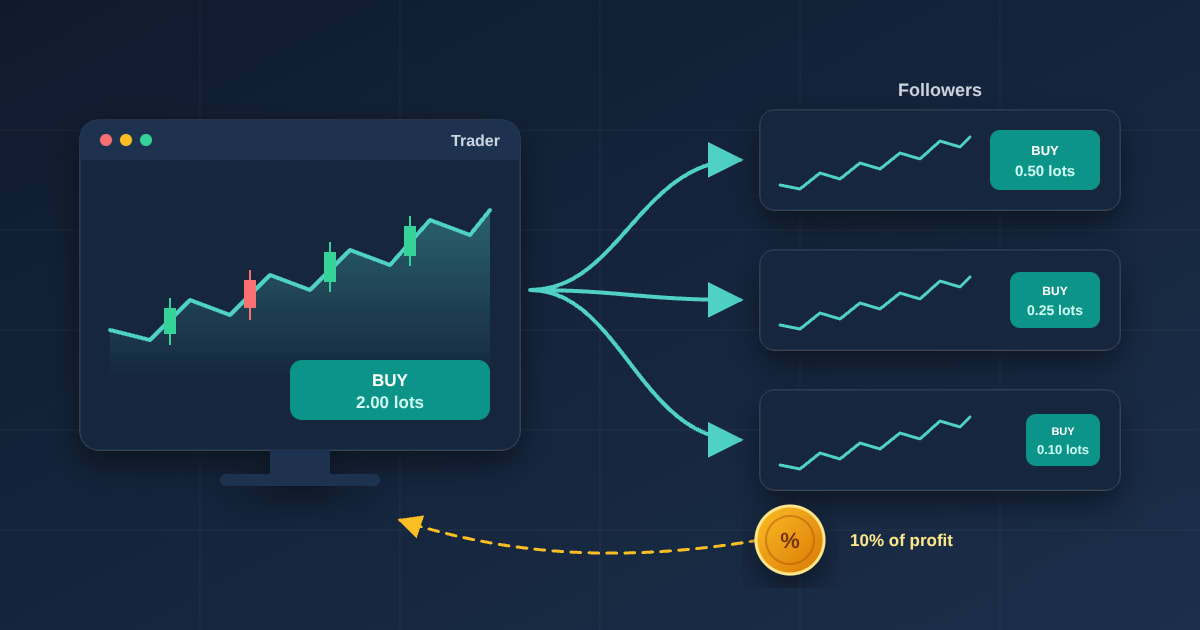
What Is Copy Trading and How It Works
Copy trading is a subscription that makes your account repeat another trader's trades, sized to your money, for a share of the profit. How a trade is copied and sized, what the fee actually charges on a forex broker and a crypto exchange, what the card shows and hides, and what our own data says the follower gets.
Read article →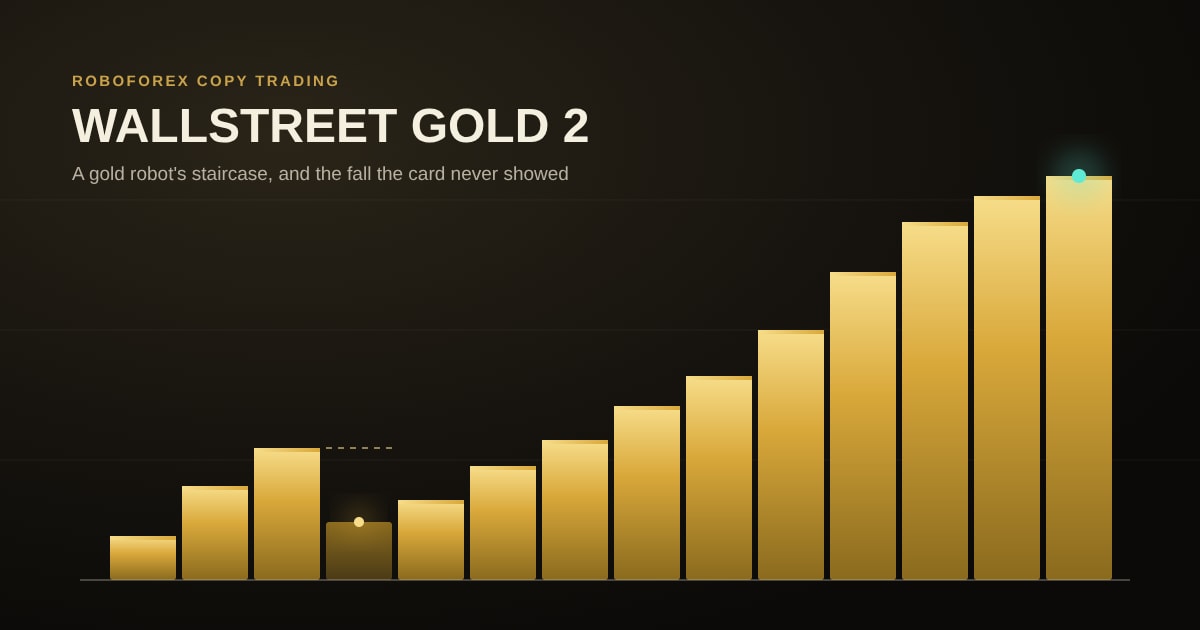
WALLSTREET GOLD 2 Review: XAUUSD Copy Trading as a Staircase, Not a Spike
WALLSTREET GOLD 2 is one of the most-copied accounts in our CopyFX rating: a gold-only robot with a staircase record and a card whose drawdown figure understates its worst fall. The card never showed the account's first-year fall, and the trader's original account on the same robot has taken a fall this one has not. What the full record shows, what the fee really takes, and how to size it.
Read article →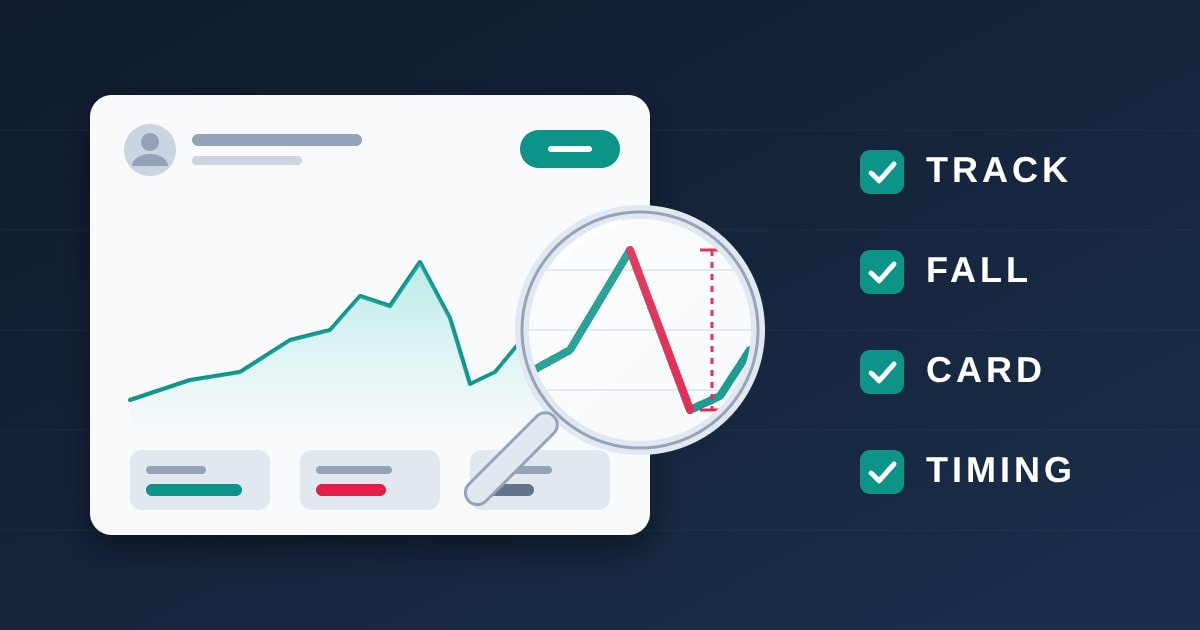
How to Choose a Good Copy Trader: Four Checks, Scored on the Day You Would Have Made Them
Every guide lists the same checks - track record, drawdown, return, followers, fee. We scored them on 748,826 entry days across every followed RoboForex strategy, classed by what the card showed that morning, and on Bybit's published follower pools. The checks barely move the odds of a winning quarter; they shrink the losing one.
Read article →