
Ledger Review: Which Hardware Wallet Model Actually Fits You
A practical Ledger review covering all five current hardware wallet models, the Secure Element security core, Ledger Recover explained honestly, and the 2020 breach's lasting phishing risk.
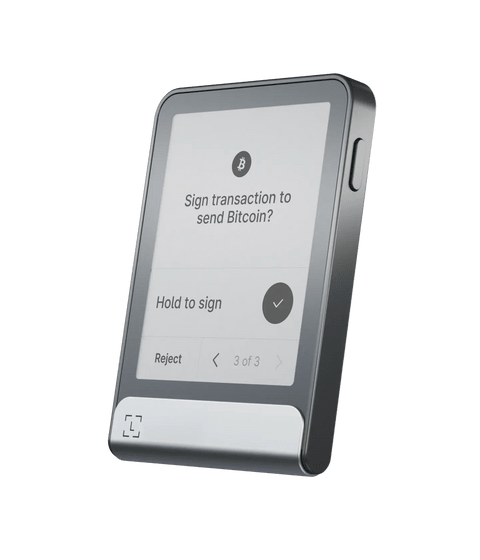
Quick verdict
Ledger is the most recognized hardware wallet brand on the market, and for most people looking for a first device, that recognition is itself worth something: more third-party integrations, more written support material, more people who can help you if something goes wrong.
The real asterisk is not the device security — it is the company's own history:
- a 2020 data breach exposed the contact details (not funds, not keys) of over a million customers, and phishing built on that leak still circulates years later;
- Ledger's own optional backup subscription, Ledger Recover, splits an encrypted copy of your recovery data across three companies — genuinely opt-in, but a real philosophical break from "not your keys, not your crypto" that a chunk of the crypto community has never forgiven.
Neither is a reason to avoid Ledger outright. Both are things a full review should actually explain instead of skating past.
Ledger in one table
| Category | Ledger review notes |
|---|---|
| Company | Ledger SAS, Paris — hardware wallets since 2014 |
| Scale | 8+ million devices sold, shipping to 165+ countries |
| Current lineup | 5 models: Nano S Plus, Nano X, Nano™ Gen5, Flex, Stax |
| Security core | Certified Secure Element chip on every model (CC EAL6+, except Nano X at EAL5+) |
| Firmware | Ledger OS — closed-source, unlike some competitors |
| Backup options | Paper sheet (all models), physical Recovery Key card (bundled on newer models), optional paid Ledger Recover subscription |
| Coin support | 500+ directly through the Ledger Wallet app, thousands more via 50+ third-party wallet integrations |
| Known incident | 2020 e-commerce database breach — contact data only, no funds or keys |
| SmartRevenueHub angle | Broadest support and ecosystem of any wallet in our rating — see how that weighs against the reputation hit in the full hardware wallet rating |
What Ledger actually is
Ledger has been making hardware wallets since 2014 and has sold more of them than any other brand — over 8 million units, shipped to more than 165 countries. That scale is the practical reason Ledger keeps coming up in "which wallet should I buy" conversations: more exchanges, DeFi apps and third-party wallets test against Ledger first, so compatibility problems get found and fixed faster than on smaller brands.
Every Ledger device is built around a certified Secure Element chip — the same category of chip used in passports and bank cards — combined with Ledger's own closed-source operating system, Ledger OS. Your private keys are generated and stored inside that chip and never leave it, even when you're signing a transaction on a phone or laptop that could be compromised.
The companion software has been through a rebrand: long-time users will still know it as Ledger Live; Ledger now ships it as the Ledger Wallet app, with a wider scope — buying, swapping, staking and portfolio tracking through 50+ integrated providers, not just a device manager.
Five current devices, one shared security core
The part most "Ledger review" content skips is that there isn't one Ledger anymore — there are five, and they genuinely fit different people.

| Model | Screen | Connectivity | Secure Element | Weight | Backup included |
|---|---|---|---|---|---|
| Nano S Plus | 1.1" OLED | USB-C only, cable use | CC EAL6+ | 21g | Paper recovery sheet |
| Nano X | 1.1" OLED | USB-C + Bluetooth | CC EAL5+ | 34g | Paper recovery sheet |
| Nano™ Gen5 | 2.8" E Ink | USB-C + Bluetooth + NFC | CC EAL6+ | 46g | Recovery Key card included |
| Flex | 2.8" Gorilla Glass E Ink | USB-C + Bluetooth + NFC | CC EAL6+ | 58g | Recovery Key card included |
| Stax | 3.7" curved E Ink | USB-C + Bluetooth + NFC + Qi charging | CC EAL6+ | 45g | Recovery Key card + magnetic shell |
A few real, specific differences worth knowing before you pick one:
- Nano S Plus has no wireless anything and no iOS support at all — it's a cable-only device, which is exactly what makes it the honest "keep it in a drawer, plug it in twice a year" option rather than a daily-use wallet.
- Nano X is the odd one out on certification — it's the only current model running the older EAL5+ Secure Element rather than EAL6+. Still a real certified chip, just one step below the rest of the current lineup.
- Flex's screen is Gorilla Glass; Stax's curved screen is plastic. Counterintuitively, the cheaper Flex has the more scratch-resistant display.
- Every touchscreen model (Nano Gen5, Flex, Stax) runs Clear Signing and Transaction Check — on-device checks that flag when a transaction doesn't match what a connected app claims it is, which is exactly the class of attack that drains wallets through malicious "approve" prompts.
Ledger Recover: what it actually does
This is the one part of Ledger's product line that genuinely deserves its own section, because most coverage either ignores it or reduces it to a soundbite.
Ledger Recover is an optional, separately-paid subscription (operated by a named third party, Coincover) that gives you a way back into your wallet if you lose your device and your paper backup. Mechanically:
- Inside your Ledger's Secure Element chip, a digital backup of your recovery data is created and encrypted.
- That encrypted backup is split into three pieces.
- Each piece is sent to a Hardware Security Module run by a separate, independent company, in a separate country.
- To recover access, you verify your identity — a passport, national ID, or (US/Canada) driver's licence — with two of the three companies independently.
No single company, including Ledger itself, holds a complete copy of your recovery data at any point.
It's a genuinely well-engineered system for the problem it solves — people who lose a device and a paper backup at the same time, which happens more often than the self-custody community likes to admit. It's also entirely optional: a Ledger device you never subscribe to Recover with behaves exactly like it always did, with your keys never leaving the chip.
The controversy, when Ledger first announced this in 2023, wasn't really about the engineering — it was philosophical. Ledger had spent years marketing "your keys never leave the device" as an absolute, and Recover introduced a real (if opt-in, if well-secured) mechanism for a piece of your key material to leave the device under specific conditions. For a community whose founding idea is "not your keys, not your crypto," that felt like a bait-and-switch, regardless of how the cryptography actually worked. It's worth knowing that history before you decide whether the feature is useful to you or not — plenty of long-time Ledger owners simply never subscribe and use the included paper sheet or Recovery Key card instead.

The 2020 breach, and why Ledger still warns about phishing
In July 2020, attackers breached Ledger's e-commerce and marketing database — not the hardware, not the app, the website's customer records. Names, emails, phone numbers and postal addresses for over a million customers were exposed, and that dataset was later dumped publicly.
No private keys, device secrets or funds were part of that breach. The device security model was never touched. But the fallout has genuinely outlasted the incident itself: because attackers know exactly who owns a Ledger, "your Ledger Live needs an urgent security update" phishing emails and fake support calls targeting real Ledger customers have circulated for years since — visit Ledger's own site today and you'll still see an active banner warning that Ledger will never ask for your 24-word recovery phrase, under any circumstances.
The honest takeaway: this is a reputational and phishing-exposure problem, not a security-architecture flaw. It's also exactly why the golden rule of hardware wallets bears repeating — no legitimate support channel, from any brand, will ever ask you to type your recovery phrase anywhere.
Which Ledger model actually fits you

| You are... | Best fit | Why |
|---|---|---|
| Buying a first hardware wallet on a budget | Nano S Plus | Cheapest entry point, same EAL6+ chip, no wireless attack surface at all |
| Trading or checking balances from your phone regularly | Nano X or Nano™ Gen5 | Bluetooth without giving up the Secure Element |
| Using DeFi apps and want on-screen scam warnings | Flex | Clear Signing and Transaction Check on a bright, scratch-resistant screen, at a lower price than Stax |
| Want the largest screen and don't mind paying for it | Stax | Biggest, clearest display; the same security core as Flex |
| Storing a long-term holding you'll touch once a year | Nano S Plus | No battery to degrade, no wireless radio idling in a drawer |
There is no wrong certified-secure-element answer here — the differences are about screen, connectivity and price, not about whether your keys are safe.
Pros and cons
| Pros | Cons |
|---|---|
| Widest third-party and exchange compatibility of any hardware wallet | Company's own 2020 breach still fuels phishing years later |
| Certified Secure Element on every current model | Nano X alone sits one certification tier below the rest (EAL5+) |
| Closed-source firmware reviewed by Ledger's own security team and external bounty researchers | Closed-source, so you're trusting Ledger's audits rather than reading the code yourself |
| Real on-device scam detection (Clear Signing, Transaction Check) on the touchscreen models | Ledger Recover's existence still splits opinion in the self-custody community, even though it's opt-in |
| Five real models across a wide price range | Nano S Plus has no iOS support and no wireless option at all |
Final verdict
Ledger earns its position as the most widely adopted hardware wallet honestly: the broadest compatibility, five real devices that actually fit different budgets and use cases, and a certified security core Ledger hasn't cut corners on since 2014.
The two things worth carrying into your decision aren't about the hardware — they're about the company. The 2020 breach means you should be more suspicious than usual of anything claiming to be Ledger support. And Ledger Recover is worth understanding on its own terms — genuinely optional, genuinely well-engineered, and still a real philosophical shift some long-time users have chosen not to buy into.
See the full breakdown against the other five wallets we've researched, including the same security, backup and reputation scoring used here, on the hardware wallet rating.
Related
View category
Trezor Review: Three Wallets, One Security Floor
Safe 3, Safe 5 and Safe 7 share a certified secure element, open-source firmware and Multi-share Backup. The feature that most protects you is on the 59-dollar device; the extra 190 buys screen and wireless.
Read article →
Trezor Safe 7 Review: What "Quantum-Ready" Actually Protects
Trezor built post-quantum cryptography into the Safe 7, and it guards the bootloader, firmware and device authentication — not your coins. Three chips from three vendors, an auditable secure element, and a data breach disclosed a week ago.
Read article →
DEVI Algo Trading Review: Three Bybit Accounts, One Brand
Three accounts share the DEVI name and a near-flat risk profile, and the cleanest record of the three is the one to trust least. Which of the family a copier can actually judge, and what its perfect flagship cannot prove.
Read article →