
What Is Cryptocurrency? Blockchain, Coins and Tokens Explained
A real, practical explanation of how blockchain works, why a coin and a token are not the same thing, and why that distinction is the most common way people lose funds.
What "cryptocurrency" actually means
A cryptocurrency is a digital asset that a network of independent computers keeps track of together, instead of one bank or company keeping the one "official" record. Nobody's central database says how much Bitcoin you own - thousands of computers around the world each hold their own copy of the same shared ledger, and they use math (cryptography, which is where the "crypto" comes from) to agree on which copy is correct without needing to trust each other individually. That shared ledger is called a blockchain, and understanding how it actually works answers most of the "wait, why does that matter" questions that come up later - destination tags, network fees, why sending to the wrong network can lose funds, all of it traces back to this one idea.
This is the first article in an ongoing series covering crypto fundamentals - coins, tokens, wallets, networks, fees - each piece links back to this one and to each other, so you can go as deep as you actually want rather than reading one long wall of text.
Blockchain: the ledger that makes it work

"Blockchain" is exactly what it sounds like: a chain of blocks. Each block is a batch of recent transactions, and - this is the important part - each new block contains a cryptographic fingerprint (a hash) of the block before it. Change anything in an old block, even one character, and its hash changes, which breaks every block after it. That's what makes the ledger practically tamper-proof once a block has enough newer blocks built on top of it: rewriting history would mean redoing the work for every block since, faster than the entire rest of the network combined.
Here's the actual step-by-step path a transaction takes, from you hitting "send" to it being permanent:

Nobody's individual say-so decides whether your transaction goes through - the network's own rules do, and that's the entire point of "decentralized."
One consequence of that public ledger is worth knowing early, because it surprises people later: every coin carries the record of the addresses it passed through, and an exchange can read it. That is why a perfectly honest buyer can still have a deposit put under review over something that happened before they owned it.
Coin vs token - the distinction that trips almost everyone up eventually
This is the single most practically important distinction in this whole topic, because getting it wrong is how people actually lose funds.

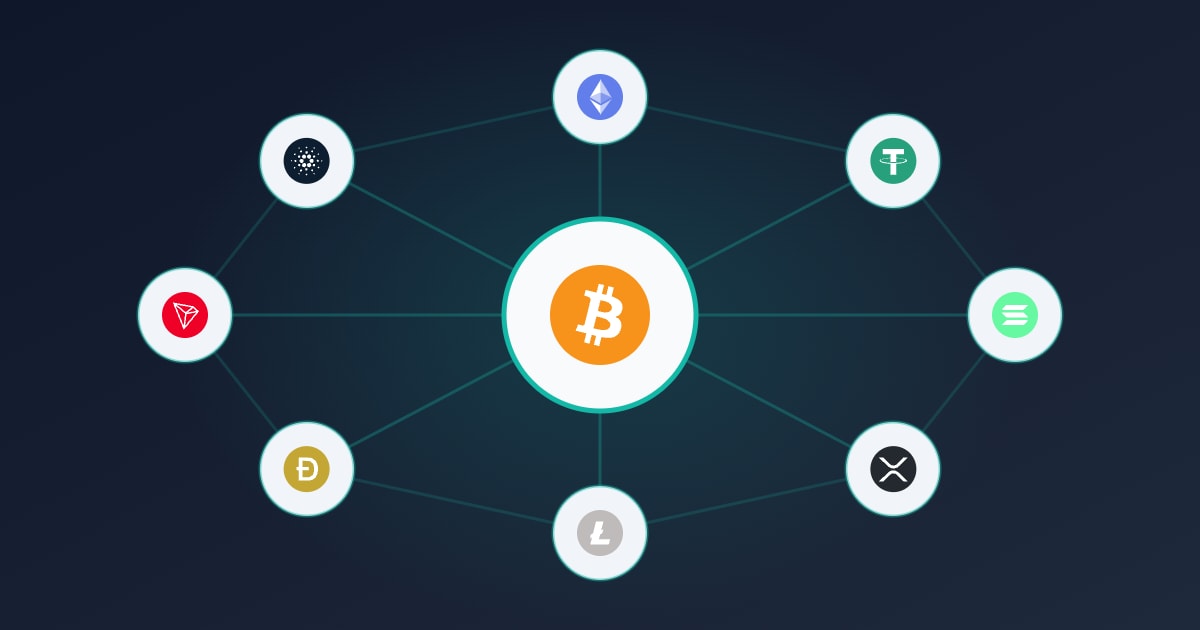
A coin has its own blockchain. Bitcoin (BTC), Ethereum (ETH), Litecoin (LTC), XRP and Solana (SOL) each run on their own independent network, with their own rules and their own native fee currency.
A token is built on top of someone else's blockchain, using that chain's own rules for creating and moving assets. USDT (Tether) is the clearest example: the same "USDT" isn't one single thing - it exists as separate versions on Ethereum (as an ERC-20 token), on Tron (as a TRC-20 token), on Solana (as an SPL token) and several others. These versions are not interchangeable - sending ERC-20 USDT to a wallet address that only understands TRC-20 doesn't convert it, it just doesn't arrive correctly. Our USDT to Monobank card guide covers this exact mistake in detail, since it's the single most common way people lose funds converting USDT specifically.
The practical rule: before sending a token anywhere, confirm the network matches on both ends. Before sending a coin, there's no network question to ask at all - it only has one.
Proof of Work vs Proof of Stake, in plain terms
Both are just different answers to the same question: who gets to add the next block, and why should everyone else trust them?
Proof of Work (Bitcoin, Litecoin) has computers competing to solve a difficult, pointless-on-purpose math puzzle. Whoever solves it first gets to add the next block - the "work" itself is the proof they earned the right, since faking it would cost more electricity than it's worth.
Proof of Stake (Ethereum since 2022, Solana) instead has participants lock up ("stake") some of the network's own coin as collateral, and the network picks among them to add the next block roughly in proportion to how much they've staked. Acting dishonestly risks losing that stake - the collateral itself is the deterrent, using a small fraction of the electricity Proof of Work needs.
Neither is universally "better" - it's a real, ongoing design trade-off between energy use, decentralization and throughput, not a solved argument.
A short glossary of the names you'll keep seeing
- BTC (Bitcoin) - the first cryptocurrency, still the reference point everything else gets compared to. See our Litecoin to Bitcoin exchange guide if you're converting into it.
- ETH (Ethereum) - introduced programmable "smart contracts," which is what makes tokens like most USDT/USDC versions possible in the first place.
- LTC (Litecoin) - same basic design as Bitcoin, tuned for faster, cheaper transfers (2.5-minute blocks vs Bitcoin's 10).
- XRP - built for fast, cheap settlement between institutions and exchanges; see our Litecoin to XRP exchange guide for the one XRP-specific detail (destination tags) that trips up first-timers. A full breakdown lives in our What Is XRP? The XRP Ledger, Destination Tags and Fast Settlement Explained guide.
- SOL (Solana) - a newer, high-throughput Proof of Stake chain, popular for its low fees and speed.
- USDT / USDC - stablecoins: tokens designed to hold a steady $1 value (each backed 1:1 by real reserves, at least as claimed/audited by their issuers), rather than fluctuating like BTC or ETH. Useful precisely because they let you hold "dollar value" without leaving the crypto rails.
If you're looking to actually buy, hold or trade any of these, our reviews of Binance, Bybit and OKX cover fees, tools and account risk in detail, and the crypto exchange rating compares all of them side by side on the same criteria. If you'd rather swap SOL or USDT directly from your own wallet instead of registering on an exchange, our USDT to SOL swap tool does that on-chain, with no account needed.
Wallets: who actually holds your crypto
A wallet doesn't really "store" your crypto - the blockchain does that. What a wallet actually holds is your private key, the piece of cryptographic proof that lets you authorize spending whatever the blockchain shows as yours. Lose the key, lose access - there's no "forgot password" recovery, since there's no central company holding your account.
For the custodial vs non-custodial and hot vs cold distinctions, see our wallet types overview. For exactly how those words are generated and why 12 of them are not weaker than 24, see what a seed phrase actually is.
Bottom line
Almost everything else worth knowing about crypto builds on the three ideas above: a shared ledger nobody controls alone, the real difference between owning a coin and holding a token, and the trade-off between how Proof of Work and Proof of Stake decide who's trusted to add the next block. Keep those straight and the rest - which network a token lives on, why a fee is paid in a different asset than the one you're sending, why a swap needs the right address format - stops being confusing trivia and starts being obvious consequences of how the system is actually built.
Related
View category
USDT Network Fees Compared: TRC-20 vs ERC-20 vs BEP-20 vs SPL
The same USDT transfer costs a fraction of a cent on one network and up to $15 on another - and it's not about which is 'better,' it's four structurally different fee mechanisms. What decides each one, and how to tell before you send.
Read article →
What Is a Seed Phrase? The Words That Are Your Money
A seed phrase is not a password you can reset - it is a fixed encoding of a random number, and that number is your entire wallet. How BIP-39 actually builds one, why 12 words is not weaker than 24, and what the mechanics change about how you store it.
Read article →
What Is XRP? The XRP Ledger, Destination Tags and Fast Settlement Explained
What XRP was actually built for, how the XRP Ledger reaches consensus without mining, and the one detail (destination tags) that trips up first-timers sending to an exchange.
Read article →